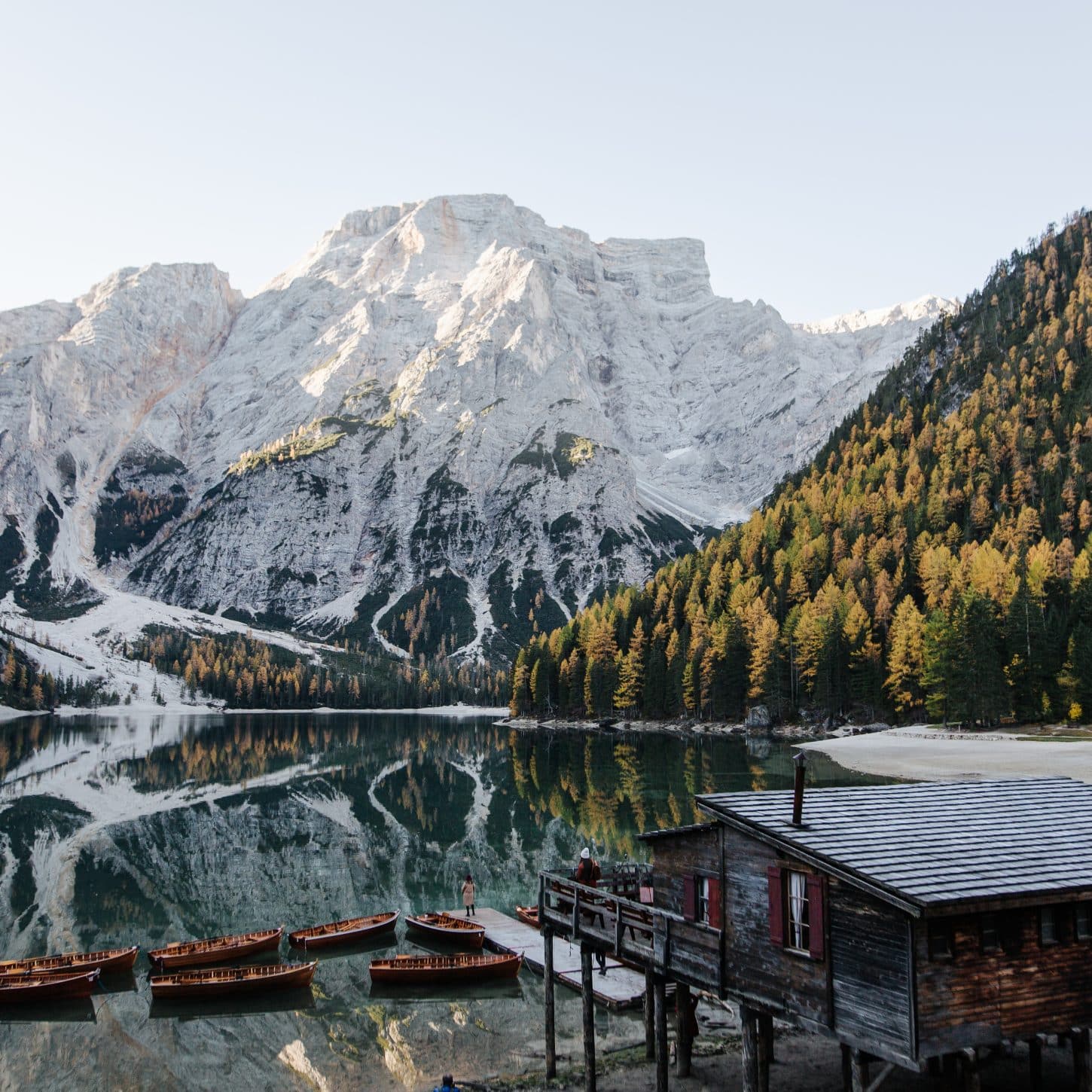
Standing at the base of the Dolomites, you’re looking at something genuinely extraordinary: rock formations that began their existence as tropical coral reefs, spent millions of years beneath an ancient sea, and eventually rose to become some of Europe’s most dramatic mountain peaks. The history of the Dolomites stretches back over 250 million years, encompassing geological transformations that seem almost impossible when you’re staring at those pale, jagged towers. These mountains tell a story of shallow lagoons teeming with marine life, of chemical processes that puzzled scientists for centuries, and of continental collisions that pushed seafloor sediments three kilometers into the sky. Understanding this ancient history transforms how you see these peaks. They’re not just beautiful backdrops for hiking and skiing; they’re geological time capsules that preserve evidence of vanished oceans, extinct creatures, and the slow, powerful forces that continue shaping our planet.
Origins in the Tethys Sea
The Dolomites didn’t start as mountains. They began as shallow, sun-drenched waters in an ancient ocean called the Tethys Sea, which separated the supercontinents of Laurasia and Gondwana. Picture the Bahamas or the Maldives, and you’re getting close to what this region looked like during the Triassic period.
The Triassic Period and Tropical Lagoons
Between 251 and 199 million years ago, the area now occupied by the Dolomites sat near the equator in a tropical climate. Warm, shallow lagoons covered the region, protected from open ocean currents by barrier reefs. The water was clear, warm, and rich in calcium carbonate, creating perfect conditions for marine life to flourish. Sea levels fluctuated during this period, sometimes exposing the seafloor to create tidal flats and evaporative basins. These cycles left distinct layers in the sediment that geologists can still read today, like pages in a book recording millions of years of environmental change.
Coral Reef Foundations and Marine Sedimentation
Massive coral reefs grew in these waters, built by organisms that extracted calcium carbonate from seawater to construct their skeletons. When these creatures died, their remains accumulated on the seafloor, compressing over time into thick layers of limestone. Some reef structures grew hundreds of meters tall, creating the foundation for what would eventually become individual Dolomite peaks. The Sella Group and Marmolada, for instance, represent ancient reef complexes that have maintained their basic shape through all subsequent geological upheaval.
The Chemistry of Dolomitization
Here’s where the Dolomites get their name and their distinctive character. The pale, almost pinkish rock that gives these mountains their unique appearance isn’t ordinary limestone. It’s dolomite rock, formed through a chemical process that puzzled scientists for over two centuries.
Déodat de Dolomieu and the Discovery of Magnesium Limestone
In 1791, French geologist Déodat de Dolomieu collected rock samples from the Southern Alps and noticed something unusual. The rock looked like limestone but didn’t react as strongly to acid. Analysis revealed that magnesium had partially replaced the calcium in the mineral structure, creating a new type of carbonate rock. The mineral was named dolomite in his honor, and the mountain range eventually took the same name. Dolomieu couldn’t have known that his discovery would spark a geological debate lasting into the 21st century.
Transformation from Calcium Carbonate to Dolomite Rock
The “dolomite problem” refers to the difficulty scientists have had explaining exactly how this mineral forms. We know that magnesium-rich fluids must percolate through limestone, replacing calcium atoms with magnesium atoms in the crystal structure. But replicating this process in laboratory conditions has proven remarkably difficult. Current theories suggest that specific conditions in the Triassic lagoons, including high temperatures, evaporation, and bacterial activity, created the perfect environment for dolomitization. The process made the rock harder and more resistant to weathering than ordinary limestone, which explains why Dolomite peaks maintain such sharp, dramatic profiles.
Tectonic Uplift and the Alpine Orogeny
Rock formations don’t become mountains on their own. The Dolomites needed a force powerful enough to push seafloor sediments thousands of meters into the air. That force came from the collision of continents.
The Collision of African and European Plates
Beginning around 65 million years ago, the African tectonic plate began pushing northward into the European plate. The Tethys Sea, which had separated these landmasses, began to close. Sediments that had accumulated on the seafloor for hundreds of millions of years found themselves caught between two converging continents. This collision didn’t happen quickly by human standards. The plates moved at roughly the speed your fingernails grow, about 2-3 centimeters per year. But over tens of millions of years, this slow squeeze produced enormous pressure.
Formation of the Iconic Vertical Peaks
The Dolomite sediments responded to this pressure differently than surrounding rocks. While softer materials folded and deformed, the hard dolomite rock fractured into massive blocks that were pushed upward along fault lines. This created the distinctive vertical walls and isolated towers that make Dolomites history so visually distinctive from other Alpine regions. The Tre Cime di Lavaredo, perhaps the most photographed formation in the range, represents a block of ancient reef material thrust upward and then sculpted by erosion. The peaks reached roughly their current height around 2 million years ago, though they continue rising by a few millimeters each year.
Glacial Erosion and Post-Ice Age Landscapes
Mountains might be built by tectonic forces, but their final shape comes from erosion. For the Dolomites, the primary sculptor was ice.
Quaternary Glaciations and Valley Carving
Over the past 2.6 million years, Earth has experienced repeated ice ages. During glacial periods, massive ice sheets covered much of the Alps, and valley glaciers flowed down from the highest peaks. These glaciers acted like slow-moving rivers of ice, grinding away at the rock beneath them and carving the U-shaped valleys that characterize the region today. The ice also created the dramatic cirques, or bowl-shaped depressions, that now hold many of the Dolomites’ alpine lakes. When the last major glaciation ended around 11,700 years ago, the retreating ice left behind moraines, erratic boulders, and the polished rock surfaces still visible throughout the range.
Traces of Prehistoric Life and Human Settlement
The Dolomites preserve more than geological history. They contain evidence of the creatures that lived in those ancient seas and the humans who first ventured into these mountains.
Fossil Records of Ancient Marine Organisms
Paleontologists have discovered remarkable fossil deposits throughout the Dolomites. The Triassic sediments contain remains of ammonites, brachiopods, crinoids, and early fish species. Some formations preserve entire reef ecosystems, allowing scientists to reconstruct the food webs and ecological relationships of 230 million years ago. The Bletterbach Gorge, a UNESCO World Heritage site, exposes rock layers spanning millions of years and has yielded fossils of early reptiles and amphibians. These discoveries have made the Dolomites one of the most important sites for understanding life during the Triassic period.
Evidence of Mesolithic Hunter-Gatherers
Humans arrived in the Dolomites much more recently, but still in prehistoric times. Archaeological sites in the region show evidence of Mesolithic hunter-gatherers, people who lived between roughly 10,000 and 5,000 BCE. They likely followed game animals into the high valleys during summer months, leaving behind stone tools and campfire remains. The most famous human discovery in the broader Alpine region is Ötzi the Iceman, found in 1991 near the Austrian-Italian border. While not technically in the Dolomites, his 5,300-year-old remains demonstrate that prehistoric people were crossing high Alpine passes millennia ago.
The Dolomites as a UNESCO World Heritage Site
In 2009, UNESCO recognized the Dolomites as a World Heritage Site, citing both their geological significance and their exceptional natural beauty. The designation covers nine distinct areas totaling over 141,000 hectares. The UNESCO citation specifically mentions the importance of the Dolomites for understanding Earth’s geological history, particularly the formation of carbonate platforms and the processes of dolomitization. The peaks are described as having “intrinsic scenic importance,” with their vertical walls, sheer cliffs, and high density of narrow valleys creating landscapes of extraordinary aesthetic value.
This recognition brought increased attention to conservation efforts in the region. The Dolomites face pressures from climate change, including melting permafrost that destabilizes rock faces, and from the millions of tourists who visit annually. Managing these challenges while preserving the geological and natural heritage requires ongoing cooperation among Italian provinces, national authorities, and international organizations.
The ancient history embedded in these mountains reminds us that landscapes we consider permanent are actually snapshots in a much longer story. The Dolomites have been tropical seas, buried sediments, and rising peaks. They’ll continue changing long after we’re gone. Standing among them, knowing their history, you’re witnessing a chapter in Earth’s ongoing transformation, written in pale rock and vertical walls that once lay beneath warm, shallow waters on the other side of the world.